Stretching tag:

Sign and Banners - Sponsored Post

Posted by Think Extraordinary on 11:26 PM 0 comments

Sign and Banners - www.signline.com
useful stuff

sponsored like
Beautiful001's profile on MyLikes
Continue...


Bigfoot's Descendants Live Among Humans for Over 100 Years

Posted by mohd irfan on 3:25 AM 0 comments

35 year ago, the scull of the first Big-foot was excavated for the first time in history. People residing in the area for years still remember meeting it when it was still alive.

Local residents who buried a mother and a son indicated location of their graves. A rubber shoe branded 1888 was removed from the woman’s burial (a mirror at the head indicated it was a female). Approximately the same time Zana, a Bigfoot, died.

The researcher’s heart was beating with anticipation of the unusual find, as never before scientists laid their hands on a Bigfoot, alive or dead.

The excavation was conducted by Igor Burtsev, at the time, a young scientist, and today a leading Russian cryptozoologist. He spent several years trying to obtain the right for graves excavation in the Abkhazian village Tkhina, where Zana used to live. As luck would have it, his old college friend, an Abkhazian, became a local official upon his return to the motherland from Moscow.

“I could not have seen Zana myself, she passed away 50 years before I was born,” says Apollon Dumava, former chair of the local Council. “But my older relatives remembered her. How could you forget her? She was 6.6 feet tall, had long strong arms covered with hair, curvy hips that inspired the desire of local men, large hanging breasts, flat forehead and huge red eyes.

Zana was very strong and easily carried 110 pounds sacks with grain to the water mill with only one hand.

Apollon said his father told him that Zana was caught in a gulch of the Adzyubzha River.

She was hunted down by a local merchant. Zana was incredibly smart and could disappear a second before she would be caught. Yet, the hunter outsmarted her. He left red male underwear at the meadow frequented by the hairy creature. She was caught while trying to put the underwear on her head and hips.

The captive was named Zana (zan means black in Georgian) and placed in a ditch enclosed with a fence made of sharpened logs. She was growling, throwing herself at kids who bothered her with sticks and dirt clods. Only a few years later, when Zana was slightly tamed, she was moved to a woven hut. She slept on the ground in a cave she dug out. She never learned how to use a spoon and a plate so she ate with her hands. She was always naked. She never learned to speak, but recognized her name. Zana could take boots off her owner’s feet. She was also great at imitating the sound of squeaking gate, and it made her very happy every time she did.

Zana was not surrounded by angels. Locals made her drink wine, it did not take her long to get drunk and become sexually aggressive. There were always those willing to entertain themselves with a monster. They say during drunk orgies her owner would establish a prize for the one who “mounts” Zana. The prizes would always find their winners.

When Zana gave birth to her first child, she took it to a creek and washed it in ice cold water. The baby died. The same happened to her second child. After that, the locals decided to take babies from the silly mother. Her next children survived. There were four of them, two boys and two girls. People had no idea who their fathers were. Years later, before a census, children were assigned to a local resident Kamshish Sabekia, who acknowledged “playing” with Zana before he got married.

Locals remember Khvit the most. He was 6.6 feet tall, had grayish skin like his mother’s, thick curly hair and full lips. He had lived in Tkhina all his life and passed away in 1954 before he turned 70. Apollon remembers him well. Like his mother, Khvin did not like children who used to get into his garden to steal grapes and pears. Once Khvit had a fight with his relative and jumped him. Defending himself, his opponent hit him with a mattock and cut his arm along the elbow. The arm had to be amputated. Apollon has a memory of this incredibly strong person plowing his lot with one left arm.

Khvit was a human being, he could speak, got married twice and had two daughters and a son.

I was looking for his daughter in Abkhazia, but she was electrocuted a year earlier. I met with her son, Robert Kukubava, and asked him for permission to take pictures of his family album.

Faces of Khvit and his sister bear resemblance to Zana’s. Khvit’s older daughter Tatyana does not look like her grandmother apart from her eyes. Raisa and her brother Shuliko are undoubtedly Khvit’s children. They have similar lower jaws, protruding cheekbones, full lips and dark skin.

Within the last 30 years Igor Burtsev found nearly all Zana’s descendants. His main goal, however, was to find Zana, or, her skeleton and skull, as well as Khvit’s remnants.

Once, 35 years ago, a female skull was excavated at the Tkhin cemetery. Yet, the anthropological analysis provided evidence that the skull belonged to a black woman who somehow got to the Caucuses.

The skull of Khvit that Burtsev and I were looking at for a long time was only partly human.

Continue...


Man aims to beat record for body piercings

Posted by mohd irfan on 3:13 AM 0 comments

A Wyoming man underwent body piercings for nearly five hours in an effort to become the new record holder.

Ed Bruns was out to get 1,501 piercings Sunday and break the previous record for one session by 304.

A piercing artist put the 16-gauge piercing needles in the arms, back and legs of the 46-year-old Bruns.

Two notary publics were on hand to certify the documentation that will be sent, along with a video, to Guinness World Records.

Bruns says he was confident but felt a little tenderness at times.

A few minutes after the stunt was complete, piercing artists removed all but one of the needles. Bruns is keeping one on the back of his head with a small barbell through it.

Continue...


Man. United defeated by Chelsea

Posted by mohd irfan on 2:38 AM 0 comments

Image  and video hosting by TinyPic
Chelsea's Didier Drogba celebrates after scoring against Manchester United during their English Premier League soccer match at Old Trafford in Manchester, northern England, April 3, 2010.

Image and video hosting by  TinyPic
Manchester United's Dimitar Berbatov (top L) challenges Chelsea's John Terry (bottom L) and Alex (R) during their English Premier League soccer match at Old Trafford in Manchester northern England, April 3, 2010.

Image and video hosting by  TinyPic
Manchester United's Antonio Valencia (L) challenges Chelsea's John Obi Mikel (R) during their English Premier League soccer match at Old Trafford in Manchester northern England April 3, 2010.

Image and video hosting by  TinyPic
Manchester United's Park Ji-sung (R) challenges Chelsea's Frank Lampard (L) during their English Premier League soccer match at Old Trafford in Manchester, northern England,
Continue...


Couple's amazing escape from car crash

Posted by mohd irfan on 2:34 AM 0 comments

Astonished police officers have told how a husband and wife walked from the mangled wreckage of a car with barely a scratch after a head on collision with a lorry.

All that's left of the family saloon are the seats and the airbags after the car drove straight into the truck trying to overtake another vehicle in Collion, Switzerland.

The roof was ripped right off as the car slid under the truck for more than 50 yards before stopping, sending the doors and the boot lid flying too.

And the impact pushed the car's engine sideways as it turned around on its mountings missing the French couple by inches.

"They must have had a guardian angel. A head-on crash with a lorry is not something many people walk away from.

"In fact the lorry driver came off worse. He's still in hospital with shock," said a Swiss police spokesman.

Continue...


Valentino Rossi claims title at MotoGP Race final

Posted by mohd irfan on 2:30 AM 0 comments

Image  and video hosting by TinyPic
Fiat Yamaha Team Valentino Rossi of Italy competes during the MotoGP Race final at the 2010 Grand Prix of Qatar at the Losail International Circuit in Doha, capital of Qatar, April 11, 2010. Valentino Rossi claimed the title with a time of 42 minutes and 50.099 seconds.

Image and video hosting by  TinyPic
Fiat Yamaha Team Valentino Rossi of Italy kisses his trophy on the podium during the awarding ceremony of the MotoGP Race at the 2010 Grand Prix of Qatar at the Losail International Circuit in Doha, capital of Qatar, April 11, 2010.
Image  and video hosting by TinyPic
Fiat Yamaha Team Valentino Rossi of Italy celebrates with teammate after finishing the MotoGP Race final at the 2010 Grand Prix of Qatar at the Losail International Circuit in Doha, capital of Qatar, April 11, 2010. Valentino Rossi claimed the title with a time of 42 minutes and 50.099 seconds.

Image and video hosting by  TinyPic
Fiat Yamaha Team Valentino Rossi of Italy competes during the MotoGP Race final at the 2010 Grand Prix of Qatar at the Losail International Circuit in Doha, capital of Qatar, April 11, 2010. Valentino Rossi claimed the title with a time of 42 minutes and 50.099 seconds.
Continue...


Posted by mohd irfan on 2:11 AM 0 comments

A sudden geomagnetic storm, the strongest in the past 18 months, was caused by the Sun.

The geomagnetic storm that began on April 5 still continues, although it is subsiding. The maximum strength is most likely over. The storm has reached geomagnetic K-index 7 out of 10, the strongest in the past 540 days, since October 2008.

According to a warning issued by Russian scientists on the website of the space observatory Tesis, the storm of such strength may “affect global power systems requiring voltage correction and cause false security systems alarms.” Spacecrafts may be damaged, as well as communication systems and satellite navigation systems. Northern Lights will be observed even in midlatitudes. Acute cardiovascular diseases are not ruled out.

It is hard to say how exactly the planet was damaged. Exceptionally bright Northern Lights were observed from the orbit by astronauts working at the ISS. Japanese member of the team Soiti Noguti even took a picture of this bright sight. In the picture, the station looks like it is floating in outbursts of fire.

The scientists were surprised that there were no precursors for this strong geomagnetic storm. It was caused by certain processes on rather quiet Sun. For instance, on April 3 there was an outburst on the Sun, but it was so weak that it was not even paid much attention to. Yet, the outburst did not subside quickly as it usually happens but lasted for over seven hours. It was catastrophically long and it was not considered in the forecasts.

Scientists stated that “a huge energy that was to be released during the outburst was underestimated. In general, the incident shows that the connection between outbursts on the Sun and emissions of solar matter that causes geomagnetic storms cannot be considered a solved issue of solar physics.”

The beginning of the storm was rather weak. Later the state of magnetosphere radically changed.

Geomagnetic K-index reflecting geomagnetic fluctuations has increased from 4 to 7 in 3 hours. According to the American classification, it was G3 storm, a strong one, of the last, red, level of danger.

It is hardly likely that the cataclysm will repeat, but it cannot be ruled out completely. Unpredictability of the Sun is scary. The shocking scenario described by specialists of the American Academy of Sciences does not look that unrealistic. In the report “ Severe Space Weather Events--Understanding Societal and Economic Impacts: A Workshop Report ” they predict maximum solar activity by 2012 and, respectively, strongest outbursts and geomagnetic storms. They envisage that fluctuations will damage high-voltage power lines and transformer substations, which will leave the planet without electricity.

Unfortunately, this is not that unrealistic. Similar damages, if not even worse ones (remember "2012" movie), can be caused by long stronger outbursts of 7 hours.

Continue...


Lake Otis | Tudor Getting $7 Million Face Lift

Posted by Think Extraordinary on 10:32 AM 1 comments

When we got home there was a letter about a community meeting to let us know about the construction at Lake Otis and Tudor this summer.

So Thursday afternoon I went to St. Mary's Episcopal Church at LO and Tudor to see what was going on.

I talked to a traffic engineer about the conflict when pedestrians "walk" signs and cars turning right both had a green light at the same time. It seemed to me this was a design problem. First he said he didn't think that happened, but he would look. Then he got rather agitated and said a problem for traffic engineers was that people didn't do what they were supposed to do. He said there was a sign saying to give pedestrians the right of way. Well, yes, but when you are driving to an intersection and you have a green light, you might not happen to see such a sign any more than you might not see a pedestrian. Especially when there are two right turn lanes and the pedestrians


can be hidden by the car in the far right lane. He went back to saying that you can't account for human behavior. I did suggest again it was a design flaw to give two conflicting users a green light at the same time. Why not a red right turn arrow when the "Walk" sign is lit? Or a pedestrian overpass?

This picture from the Project website doesn't show it, but the new design will have pedestrian islands which should help a little bit. Also, this turns out to be DOWL's site and Mr. Kim (below) isn't even mentioned.


Mr. Chong Kim, the project manager from the State was much better at listening and responding without complaining about human behavior. He seemed much more responsive and less defensive.
As I drove past the corner on the way to another meeting, I watched someone with a bike who had a "Walk" sign, repeatedly have cars turn right in front of him and not letting him cross the street. I also saw the construction equipment already there, ready to start work tomorrow.


Here are the contact numbers if people have any questions or concerns.


Source:- whatdoino-steve
Continue...


Anchorage and Wasilla Tax Day Tea Party Events

Posted by Think Extraordinary on 2:45 AM 0 comments

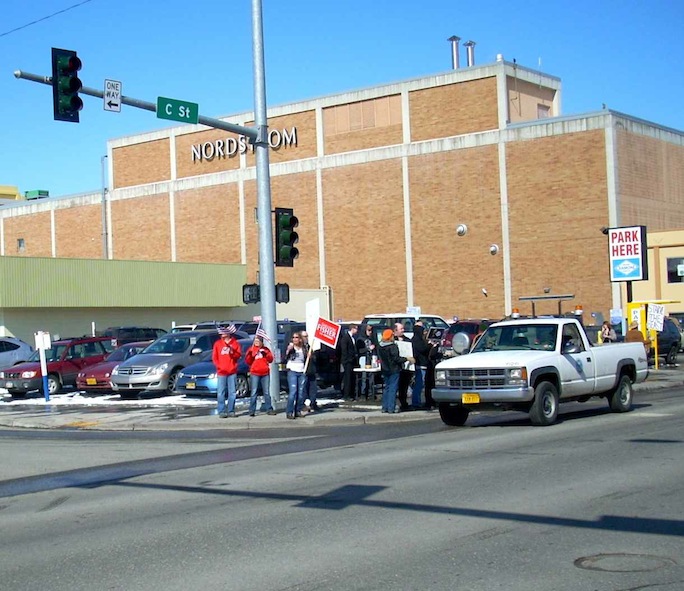
Tax Day Tea Party EventsBetween teaching morning and evening UAA classes, I spent over three hours at the noon Anchorage, and tea time Wasilla Tea Party events Thursday. I took about 40 pictures and interviewed 63 people. I polled them on actions, views and hopes.

It was a brisk and sunny early afternoon in Anchorage, with most people donning gloves for warmth. In the mid-afternoon semi-sun in Wasilla, it was warmer, and people seemed more comfortable with the air.

Though the chill was gone from the air, at first, I felt the people in Wasilla were more icy. Part of the reason for this, was that the Wasilla event was fairly tightly organized, and speakers from a trailer podium egged them on, one stating the local police were there to keep liberals from disrupting the event.

I counted two of us. In Anchorage there had been almost 20. There were no disruptions whatsoever at either event. The Wasilla cheerleader was using red herring pom-poms.

I counted 225 in Anchorage at 1:30. When I left the Wasilla event at 5:20, I had counted about 500. More people were arriving than leaving when I left Wasilla.

My overall impression was one of frustration, more than of anger from participants. Only a few people refused to talk to me, all middle-aged males. Many conversations ended upbeat and warm.

I had hoped to poll about 90 people between the two events, but only got 42 in Anchorage and 21 in Wasilla. Discussions during and after polling slowed the process.

In Wasilla, I bumped into several friends who I hadn't seen in a long time. From coaching, scouting, shooting and directing the Valley's community band for 13 years, I've made a lot of friends from all across the political spectrum. We had catching up to do whenever I encountered old friends. Kids I've coached honked from the Parks Highway, rolled down their windows and yelled messages from their siblings to me, as they waited for lights to change from red to green.

The demography of the Wasilla crowd was very different from that of last year's tax day rally, as my Part Two report tomorrow may clearly show.
I'll go through the polls in a post then. For now, here are some pictures.

Anchorage:

Wasilla:
Other Alaska Coverage:

Living in Tok - Tea Party

The Alaska Dispatch

The Anchorage Daily News

Andrew Halcro

KTUU TV
- intensely dishonest journalism by Jason Lamb
Progressivealaska
The Mudflats
Continue...


Common toads can detect earthquakes in advance

Posted by mohd irfan on 1:07 AM 0 comments

Believe it or not, common toads can detect quakes up to five days in advance, say scientists.

For centuries, animals, from dogs to rats, snakes and chickens, are said to have behaved strangely before a quake -- but their impulses have never been scientifically established.

Now, a team at The Open University has found that the toads are able to predict imminent earthquakes, after studying a population of common toads outside L'Aquila in central Italy before last year's tremors hit.

They noticed that even though it was the creature's important breeding season, nearly 96 per cent of male toads abandoned the area five days before the earthquake struck in April, 'The Daily Telegraph' reported.

The number of paired toads at the breeding site also dropped to zero three days before the earthquake. No fresh spawn was found at the site from the date that the earthquake struck to the date of the last significant aftershock.

Breeding sites are male-dominated and the toads would normally remain in situ from the point that breeding activity begins, to the completion of spawning, the scientists say.

Lead author Dr Rachel Grant said: "Our study is one of the first to document animal behaviour before, during and after an earthquake.

"Our findings suggest that toads are able to detect pre-seismic cues such as the release of gases and charged particles, and use these as a form of earthquake early warning system."

It is believed that just before an earthquake radon gas and gravity waves are released from the earth which are then reflected back by the atmosphere and detected by toads, according to the scientists.

The findings have been published in the 'Journal of Zoology'.
Continue...


Some dinosaur species changed skull shape during growth

Posted by mohd irfan on 1:05 AM 0 comments

Some dinosaur species went through drastic changes in their skull shape during normal growth because of different juvenile and adult feeding behaviours, a new research has showed.

After examining the fossil of a young sauropod dinosaur rediscovered in the collections of Carnegie Museum of Natural History, paleontologists at the University of Michigan found that the skull of diplodocus, a 150 million-year-old sauropod, went through drastic changes.

They said that these changes in skull shape may have been tied to feeding behaviour, with adults and juveniles eating different foods to avoid competition. Young diplodocus, with their narrower snouts, may also have been choosier browsers, selecting high quality plant parts.

The team led by John Whitlock and Jeffrey Wilson, who wrote their research in the Journal of Vertebrate Paleontology, said the fossil offers a rare chance to look at the early life history of Diplodocus which was found in western North America.

"Adult sauropod skulls are rare, but juvenile skulls are even rarer. What we do know about the skulls of sauropods like Diplodocus has been based entirely on adults so far," said Whitlock.

Wilson said, "Diplodocus had an unusual skull. Adults had long, square snouts, unlike the rounded or pointed snouts of other sauropods. Up until now, we assumed juveniles did too."

The small Diplodocus skull, however, suggests that major changes occurred in the skull throughout the animal's life.

"Although this skull is plainly that of a juvenile Diplodocus, in many ways it is quite different from those of the adults," Whitlock said.

"Like those of most young animals, the eyes are proportionally larger, and the face is smaller. What was unexpected was the shape of the snout -- it appears to have been quite pointed, rather than square like the adults ".

"This gives us a whole new perspective on what these animals may have looked like at different points in their lives."

They said, "This little Diplodocus skull was discovered in 1921, and more than 80 years passed before we recognised its significance.
Continue...


New pre-human species offers evolutionary clues

Posted by mohd irfan on 12:57 AM 0 comments

Australopithecus Sediba skeletons
Two partial skeletons unearthed in a South African cave belong to a previously unclassified species of pre-human dating back almost 2 million years and may shed new light on human evolution, scientists said on Thursday.

Fossils of the bones of a young male and an adult female suggest the newly documented species, called Australopithecus sediba, walked upright and shared many physical traits with the earliest known human Homo species.

The finding of the pre-human, or hominid, fossils -- which scientists say are between 1.78 and 1.95 million years old -- was published in the journal Science and may answer some key questions about where humans came from.

Lee Berger of the University of the Witwatersrand, Johannesburg, who led the team that found the fossils in August 2008, told a news conference held near the cave outside Johannesburg the discovery was "unprecedented."

"I am struck by the exceptional nature of something right on our doorstep ... there are more hominid fossils than I have ever discovered in my entire career," he said.

"When we found it we never imagined that we were looking at a new species."

Berger earlier told reporters by telephone the team were hoping to reveal a possible two further skeletons from the same site.

He was reluctant to define the new species as a "missing link" in human evolutionary history, but said it would "contribute enormously to our understanding of what was going on at that moment where the early members of the genus Homo emerged."

Powerful Hands South African Deputy President Kgalema Motlanthe told the news conference: "As any parent knows, one of the most common questions a child asks is, 'where do I come from?' It has become clear the answer is 'Africa'.

"With the World Cup in 63 days, we will now be able to welcome people from the world with fresh news of our past."

Many experts believe the human genus Homo evolved from the Australopithecus genus about 2 million years ago. One of the best-known pre-humans is "Lucy," the skeleton of a species called Australopithecus afarensis, and this new species is about 1 million years younger than "Lucy," the scientists said.

The fossils, a juvenile male and an adult female, were found in the Malapa caves in the "Cradle of Humankind" World Heritage Site, 40 km (25 miles) outside Johannesburg.

The species had long arms, like an ape, short powerful hands, a very advanced pelvis and long legs capable of striding and possibly running like a human, the researchers said.

The scientists estimate both hominids were about 1.27 meters, although the child would have grown taller.


The brain size of the younger one was probably between 420 and 450 cubic centimeters, which is small when compared with the human brain of about 1200 to 1600 cubic centimeters, they said.

"These fossils give us an extraordinarily detailed look into a new chapter of human evolution ... when hominids made the committed change from dependency on life in the trees to life on the ground," said Berger.

Paul Dirks of James Cook University in Australia, who also worked on the study, said he and a team of researchers from around the world identified the fossils of at least 25 other species of animals in the cave, including saber-toothed cats, a wildcat, a brown hyena, a wild dog, antelopes and a horse.


Bureau Report
Images: Wits University; skeletons Science/AAAS
Continue...


A robotic underwater vehicle powered by ocean movement

Posted by mohd irfan on 12:54 AM 0 comments

A robotic underwater vehicle that is powered entirely by natural, renewable, ocean thermal energy has been developed, holding out promise of almost indefinite monitoring of the ocean depths for climate and marine life studies.

Researchers have successfully demonstrated the Sounding Oceanographic Lagrangrian Observer Thermal RECharging (SOLO-TREC) autonomous underwater vehicle that uses a novel thermal recharging engine, powered by the natural temperature differences found at different ocean depths.

Scalable for use on most robotic oceanographic vehicles, this technology breakthrough could usher in a new generation of autonomous underwater vehicles.

A map of Solo-Trec's three-month journey off the Hawaiian coast.
(Credit: NASA/JPL/SIO/NOAA/U.S. Navy/NGA/GEBCO/Google)

Researchers at NASA's Jet Propulsion Lab (JPL), Pasadena, California and the Scripps Institution of Oceanography, University of California, San Diego, completed the first three months of an ocean endurance test of the prototype vehicle off the coast of Hawaii in March.

"People have long dreamed of a machine that produces more energy than it consumes and runs indefinitely," said Jack Jones, a JPL principal engineer and SOLO-TREC co-principal investigator.

"While not a true perpetual motion machine, since we actually consume some environmental energy, the prototype system demonstrated by JPL and its partners can continuously monitor the ocean without a limit on its lifetime imposed by energy supply," added Jones.

"Most of Earth is covered by ocean, yet we know less about the ocean than we do about the surface of some planets," said Yi Chao, JPL principal scientist and SOLO-TREC principal investigator.

"This technology to harvest energy from the ocean will have huge implications for how we can measure and monitor the ocean and its influence on climate," Chao added, according to a JPL release.

So far, SOLO-TREC has completed more than 300 dives from the ocean surface to a depth of 500 meters (1,640 feet). Its demonstration culminates five years of research and technology development by JPL and Scripps and is funded by the Office of Naval Research.
Continue...


Missing link between man and apes found in South Africa

Posted by mohd irfan on 12:50 AM 0 comments

Homo habilis lived 2.0-1.6 million years ago and had
a wide distribution in Africa Photo: SPL

In a find that could rewrite the history of human evolution, palaeontologists claim to have found the "missing link" between humans and their apelike ancestors.

An international team has found a two-million-year-old skeleton of a child, which it claims belongs to a new species of hominid that may have been an intermediate stage as apemen evolved into advanced humans known as Homo habilis.

According to the palaeontologists, the skeleton shares characteristics with Homo habilis, whose emergence 2.5 million years ago is seen as a key stage in the evolution of humans. The team, led by Lee Berger of the University of Witwatersrand, found the skeleton while exploring cave systems in the Sterkfontein region of South Africa, near Johannesburg, an area known as "the Cradle of Humanity".

Phillip Tobias, an eminent human anatomist and anthropologist at the university who was one of three experts to first identify Homo habilis as a new species of human in 1964, described the discovery as "wonderful" and "exciting".

"To find a skeleton as opposed to a couple of teeth or an arm bone is a rarity. It is one thing to find a lower jaw with a couple of teeth, but it is another thing to find the jaw joined onto the skull, and those in turn uniting further down with the spinal column, pelvis and the limb bones.


"It is not a single find, but several specimens representing several individuals. The remains now being brought to light by Dr Berger and his team are wonderful", the Daily Telegraph quoted him as saying.

The skeleton was found along with a number of other partially complete fossils, encased within breccia rock inside a limestone cave known as Malapa cave. Simon Underdown, an expert on human evolution, said the new finding could help scientists gain a better understanding of our evolutionary tree.

The discovery is the most important find from Sterkfontein since an almost-complete fossil of a 3.3-million- year-old Australopithecus, nicknamed Little Foot, was found in 1994.
Continue...


Oriental Yeti discovered in China

Posted by mohd irfan on 12:47 AM 0 comments

This bizarre creature dubbed the oriental yeti has baffled scientists after
emerging from ancient woodlands in remote central China. Photo: CEN

Scientists will examine a mysterious creature captured in China that has been dubbed the "oriental yeti".

The hairless animal, which was trapped by hunters in Sichuan province in the country's remote central woodlands, will be shipped to Beijing for DNA tests amid speculation it is a mythical beast described in local legend.

"It looks a bit like a bear but it doesn't have any fur and it has a tail like a kangaroo," the Telegraph quoted hunter Lu Chin as saying.

"It also does not sound like a bear — it has a voice more like a cat and it is calling all the time — perhaps it is looking for the rest of its kind or maybe it's the last one?

"There are local legends of a bear that used to be a man and some people think that's what we caught."

It is hoped the DNA tests will shed light on the mystery beast.

Photo: CEN
Continue...


New lizard species discovered in Philippines

Posted by mohd irfan on 12:45 AM 0 comments

A new giant species of monitor lizard has been discovered in the forests of the Northern Philippines, scientists have said.

The two-metre (6ft 6in) brightly coloured lizard is a secretive, fruit-eating species which was found in the forests of the heavily populated and largely deforested Luzon Island.

The discovery of the monitor lizard was described as an "unprecedented surprise" by scientists documenting the find in the Royal Society Biology Letters journal.

It has become rare to discover previously unknown species of larger animals, they said.

The species (Varanus bitatawa) is restricted to the forests of the central and northern Sierra Madre range, where biologists have conducted relatively few surveys of reptiles and amphibians.

Genetic tests revealed it was a different species from a closely related monitor lizard, from which it is geographically separated by three non-forested river valleys on the island.

The researchers suggested it was a highly secretive species which never left forests to cross open areas.

The scientists said the monitor lizards, which highlighted the "unexplored nature of the Philippines", could become a flagship species for conservation efforts to preserve the remaining forests of the region.
Continue...


Seasons Discovered on Neptune's Moon Triton

Posted by mohd irfan on 12:42 AM 0 comments

Neptune's largest moon Triton undergoes seasonal variations just like the Earth and is presently experiencing summer in its southern hemisphere, astronomers have found.

In a first-ever infrared analysis of Triton's atmosphere with the help of ESO's Very Large Telescope, the researchers have found presence of frozen nitrogen, carbon monoxide and methane on the moon’s thin surface which turn into gas as the southern hemisphere warms up by the Sun. The thin, icy atmosphere then thickens as the season advances during Neptune's 165-year orbit around the Sun.

“We have found real evidence that the Sun still makes its presence felt on Triton, even from so far away. This icy moon actually has seasons just as we do on Earth, but they change far more slowly,” said Emmanuel Lellouch, lead author of the paper reporting the results in Astronomy & Astrophysics journal.

The average surface temperature of Triton is about -235 degree Celsius and a season in the moon lasts a little over 40 years. While it is summer in its southern hemisphere, the northern hemisphere is witnessing winter.

While carbon monoxide was known to be present as ice on Triton's surface, the researchers' team has now found that the moon's upper surface layer is enriched with carbon monoxide ice by about a factor of ten compared to the deeper layers, and that it is this upper “film” that feeds the atmosphere. While the majority of Triton’s atmosphere is nitrogen, much like on Earth, the methane in its atmosphere, first detected by Voyager 2, and only now confirmed in this study from Earth, plays an important role as well.

"Climate and atmospheric models of Triton have to be revisited now, now that we have found carbon monoxide and re-measured the methane," said co-author Catherine de Bergh.

Triton is Neptune's largest of 13 moons and is the seventh largest moon in the Solar System. The moon has fascinated astronomers due to its geologic activity, presence of different types of surface ice, such as frozen nitrogen as well as water and dry ice. Its unique retrograde motion, i.e, a motion in the opposite direction to its planet's rotation, has also caused curiosity among researchers.
Continue...


Moa bones and adze head find may date to 1400s

Posted by mohd irfan on 12:39 AM 0 comments

Moa bones and a Maori adze head are discovered on an historic building site on Auckland's North Shore. Photo / NZPA
A highly significant archaeological find including Moa bones and a Maori adze head has been discovered on an historic building site on Auckland's North Shore.

The bones and adze head were uncovered at Torpedo Bay, Devonport, where a new navy museum is being developed and due to open in August.

On a scale of one to 10 the find rated as a 10 for its historic value, an archaeologist with Opus International Consultants Limited, the principal design consultants for the museum project Mica Plowman told NZPA.

The find was thought to be more than 500 years old, possibly dating back to the 1400s.

The adze head and bones of the large, flightless and now extinct moa were found in a large fire pit.

The bones were part of a bird which was killed, cooked and eaten by Maori, Ms Plowman said.

The find was hugely significant because "first-settlement sites" were very rare and few had been excavated in Auckland.

Where the bones were found in the cooking pit indicated they had been discarded, indicating those who had eaten the bird had not been worried about running out of moa bones, highly useful for carving and working into items for everyday life.

Moa were believed to have become extinct in New Zealand about 500 years ago. They grew to about four metres tall and were heavily hunted by Maori, leading to their eventual extinction.

The site was found during work to renovate old defence buildings in Torpedo Bay, an historic part of Devonport and the site of a navy base since 1866.

Torpedo Bay was used in the late 1800s as a submarine mining station to defend Auckland against a possible invasion from the Imperial Russian Fleet. The mines spanned the harbour entrance and could be detonated from the shore if an enemy ship came up the harbour to attack.

It was also the base for the spar torpedo boats which were fitted with a long spar with an attached warhead and used to ram enemy ships. The boats were never used in conflict in New Zealand. They were highly unstable and considered to be more dangerous for the crew than for enemy ships.

Ms Plowman said the historic site was about 50 metre back from the harbour but when Maori used it, the site would have been on the water's edge.

It was a rare, exciting and very significant find, she said.

Early settlement sites were rare because they were often beach front sites which did not survive.

"Moa bones were a very valuable commodity in early Maori society. It was a robust large bone which enabled them to make large fish hooks and things out of it."

Historians say Torpedo Bay had many layers of history from the early days of Maori settlement in Auckland.

Kupe, the great Maori navigator, was thought to have landed his canoe in the bay about 900AD and named it Te Hau Kapua (cloud bank carried along by the wind).

Later one of the great `seven canoe' fleet commanded by Chief Hoturoa landed the Tainui people who were thought to have named a spring in the area `Takapuna', which later came to refer to the surrounding area.

In 1917, during World War 1, German Captain Felix Graf von Luckner was held prisoner at Torpedo Bay before being transferred to the island prison at Motuihe in the Hauraki Gulf.

The cell in the cliff where von Luckner was held still existed and would be part of the new navy museum's outside exhibits.
Continue...


Fossil Found May Be Rare Dinosaur

Posted by mohd irfan on 12:36 AM 0 comments

Mountain Range H.S. Science Teacher May Have Found 'Ankylosaurid' Skull.

A Mountain Range High School science teacher with a hobby for paleontology has discovered what federal authorities said could be the first skull fragment from a rare dinosaur.

Kent Hups, a teacher at Westminster's Mountain Range High School, discovered the fossil in the Dominguez-Escalante National Conservation Area in western Colorado.

Tests are pending, but the Bureau of Land Management said Saturday that the fragment appears to be the first from an armadillo-like dinosaur called the Ankylosaurid. The bone fragment is embedded in a rock weighing more than 100 pounds.

"It took 10 hours to get it out with a rock saw," Hups said. "It was exhausting work."

Hups digs for dinosaur fossils under a BLM paleontological use permit. The teacher has findings displayed in two Colorado science museums. In 2008, Hups found a perfectly preserved footprint of an Ankylosaurid.

"As the crow flies, this (skull) was about 1 1/2 miles from we found the print,"Hups said.

Hups said if the skull fragment is confirmed as an Ankylosaurid, it would be the first fossil of its kind from that dinosaur. However Hups is tentative to claim anything yet. He said it could take a year or longer before the specimen is properly identified.

The fossil will be brought to the Denver Museum of Nature and Science for analysis.

"We knew what kind of dinosaur it is based upon of the material we’ve pulled out before," Hups said. "We've got stuff that people have never seen before. We have stuff that is articulated, meaning it is how it was found in life.

"It is definitely something very unique and very different."

Fossil hunting brings many to western Colorado, and Grand Junction tourism officials are hoping the find sparks new interest in bone hunting.
Continue...


Earthworms take group decisions, travel in herds

Posted by mohd irfan on 12:22 AM 0 comments

Contrary to the long-held belief that earthworms lack social behaviour, a new research has found the creatures, which play an important ecological role, use touch to communicate and take 'group decisions' to travel in the same direction as part of a single herd.

Researchers at University of Liege in Gembloux in Belgium, who have discovered this striking behaviour in the earthworm 'Eisenia fetida' for the first time, said a social cue influences earthworm behaviour "Our results modify the current view that earthworms are animals lacking in social behaviour," said researcher Lara Zirbes.

"We can consider the earthworm behaviour as equivalent that of a herd or swarm."

Zirbes and colleagues were originally interested in knowing how earthworms interact with other microorganisms in the soil.

However, they noticed that the earthworms formed herds to interact with each other.

"In experiments, I noticed that earthworms frequently clustered and formed a compact patch when they were out of the soil," Zirbes told the BBC.

The surprising behaviour fascinated the scientists to do more research as to how earthworms decided where to go, and whether they preferred to travel alone or in groups.

For their study, the researchers chose the earthworm Eisenia fetida, which tends to live near or at the soil surface, and carried out a series of experiments.

First, they placed 40 earthworms into a central chamber, from which extended two identical arms. The idea was to leave the animals alone, and then to see how many earthworms moved to either arm over a 24-hour period.

Over 30 identical repeats of the trial, the worms preferred to group within one chamber over the other.

"We noted that earthworms moving out of the central chamber influenced the directional choice of other earthworms.

"So our hypothesis was confirmed: a social cue influences earthworm behaviour," said Zirbes.

In another test, the researchers placed one worm at the start of a soil-filled maze, with two routes to a food source at the end.

After the worm chose its route to the food, the researchers added a second worm to see if it followed the same route as the first.

However, after repeated trials, the second worms were no more likely to take the same route as their predecessors. This indicated that the worms did not leave a chemical trail behind them that communicated their direction of travel.

Yet if two worms were placed together at the start of the maze, they were more likely to follow one another, suggesting that they used touch to communicate where they were going. In two-thirds of these trials, the worms followed each other.

"I have observed contact between two earthworms.

Sometimes they just cross their bodies and sometimes they maximise contact. Out of soil, earthworms can form balls," said Zirbes.

A modelling study then showed that, by using touch alone, up to 40 earthworms could follow each other in a similar way, explaining how herds of the animals preferred to move together into one chamber in the initial experiments.

"To our knowledge this is the first example of collective orientation in animals based on contact between followers," the researchers wrote in the journal Ethology.
Continue...


Novel way to turn water into hydrogen fuel found

Posted by mohd irfan on 12:18 AM 0 comments

A team of MIT researchers has genetically modified a virus that can exploit sunlight to split water into oxygen and hydrogen.

Splitting water is one way to solve the basic problem of solar energy: It's only available when the sun shines.

By using sunlight to make hydrogen from water, the hydrogen can then be stored and used at any time to generate electricity using a fuel cell, or to make liquid fuels for cars and trucks.

Other researchers have made systems that use electricity, which can be provided by solar panels, to split water molecules, but the new biologically based system skips the intermediate steps and uses sunlight to power the reaction directly.

The team, led by Angela Belcher, the Germeshausen Professor of Materials Science and Engineering and Biological Engineering, engineered a common, harmless bacterial virus called M13 so that it would attract and bind with molecules of a catalyst (the team used iridium oxide) and a biological pigment (zinc porphyrins).

The viruses became wire-like devices that could very efficiently split the oxygen from water molecules.

The advance is described in a paper published on April 11 in Nature Nanotechnology.
Continue...


Roman-era mummy found in Egyptian oasis

Posted by mohd irfan on 12:12 AM 0 comments

Egyptian archaeologists discovered an intricately carved plaster sarcophagus portraying a wide-eyed woman dressed in a tunic in a newly uncovered complex of tombs at a remote desert oasis, Egypt's antiquities department announced Monday.

It is the first Roman-style mummy found in Bahariya Oasis some 186 miles (300 kilometers) southwest of Cairo, said archaeologist Mahmoud Afifi, who led the dig. The find was part of a cemetery dating back to the Greco-Roman period containing 14 tombs.

"It is a unique find," he told The Associated Press, confirming that initial examinations indicate a mummy is inside the coffin.

The carved plaster sarcophagus is only 3 feet (1 meter) long and shows a woman wearing a long tunic, a headscarf, bracelet and shoes, as well as a beaded necklace. Colored stones in the sarcophagus' eyes gave the appearance she is awake.

Afifi said they had not dated the new find yet, but the burial style indicated she belonged to Egypt's long period of Roman rule lasting a few hundred years and starting 31 B.C.

He said his team first thought they had stumbled across a child's tomb because of its diminutive stature, but the decorations and features indicated it was a woman.

Afifi said it was still unclear who the woman was but said it was most likely she was a wealthy and influential member of her society, judging by the effort taken on the sarcophagus.

Mummies of people of diminutive stature have been unearthed in other parts of Egypt, where they appeared to have importance in local religions at the time, he added.

The archaeologists also found a gold relief showing the four sons of the Egyptian god Horus, other plaster masks of women's faces, several glass and clay utensils and some metal coins.

The metal coins are being checked to see whether they can date the era of the tomb more precisely.

Afifi said the find suggested the presence of a larger tomb complex, but said humid weather in the area may have destroyed similar sites.

He said none of the other 13 graves were as complete as that of the woman.

The find was made after archaeologists had made a series of exploratory digs ahead of a local council plan to build a youth center on the land. The area is known for its relics from the Greco-Roman period.

Bahariya Oasis rocketed to fame a decade ago with the discovery of the "Valley of the Golden Mummies," a vast cemetery that has yielded up hundreds of mummies, many covered in gold leaf, from the Greco-Roman period.

Those sarcophagi were decorated in a more traditional ancient Egyptian style, rather than the Roman style of the current find.

The discoveries from this period indicate the comparative wealth and prosperity of the oases at the time due to their location on major desert trading routes.
Continue...


Scientists develop new method to detect mass graves

Posted by mohd irfan on 12:10 AM 0 comments

Canadian researchers have developed a new technique for detecting mass graves from the air, which they claim will help locate human remains years after the bodies have been disposed off.

Forensic experts at McGill University in Montreal have developed a technique, called hyperspectral imaging, which searches for signs of chemical changes in the vegetation growing on grave sites.

"From personal experience, I know it's possible to miss remains by a few centimetres, then realise it later and have to come back," says Andre Costopoulos, a member of the team which has used the technique for searching animal carcasses buried at Parc Safari in Quebec.

"Even quite substantial remains within an acre can be hard to find," Costopoulos says.

This method that analyses a range of visible and infrared wavelengths as it scans terrain from the air could prove useful to investigators looking for victims of war or genocide who have been buried in mass graves, New Scientist reported.

Cameras mounted on a light aircraft or helicopter detect variations in the intensity of light of various wavelengths reflected by vegetation on the ground. The precise pattern of intensities has been found to reflect changes caused by nutrients released into the soil as bodies decompose.

When searching for clandestine graves, investigators traditionally look for signs of disturbance on the ground, or dig small test trenches to identify the most likely area.

"Plants are living systems, and any changes in water content or the soil chemistry are going to affect how they reflect light," the team said.

The technique has great potential, says Ian Hanson, a forensic archaeologist at the University of Bournemouth, UK, who has investigated mass graves in Iraq and Bosnia.

"Some of these animals were buried around 20 years ago, so you could take new imagery over areas where bodies were buried 20, 30, 40 years ago and discover things that no one has ever been able to find before." This could be particularly useful in detecting older mass graves, he said.

A related method that is currently being developed by the FBI detects living humans and recently dead bodies lying on the ground, by recognising the chemical signature of human skin. It could be used when trying to locate and rescue people who are lost or missing and to track down fugitives.
Continue...


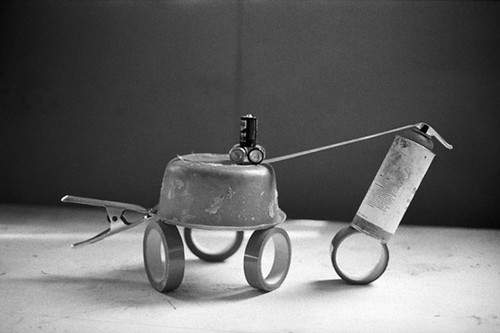
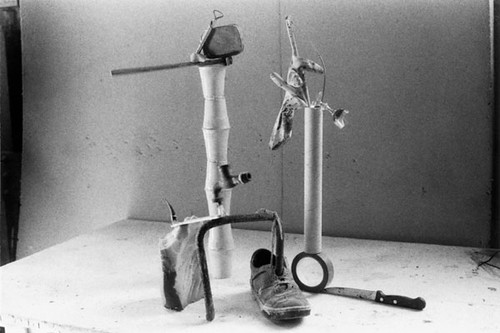
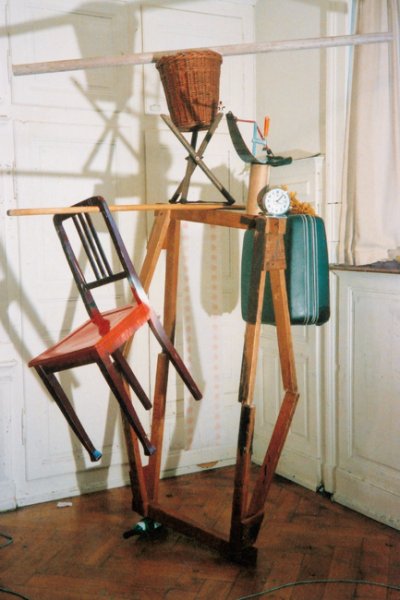
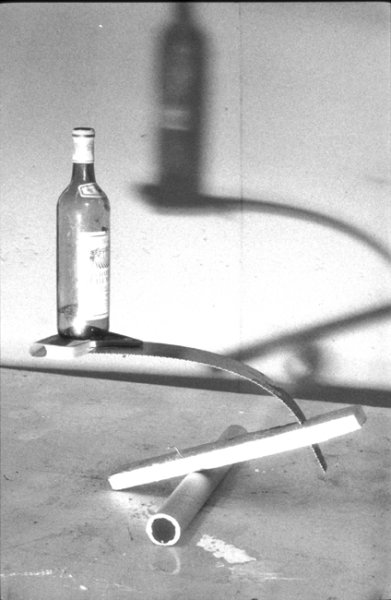
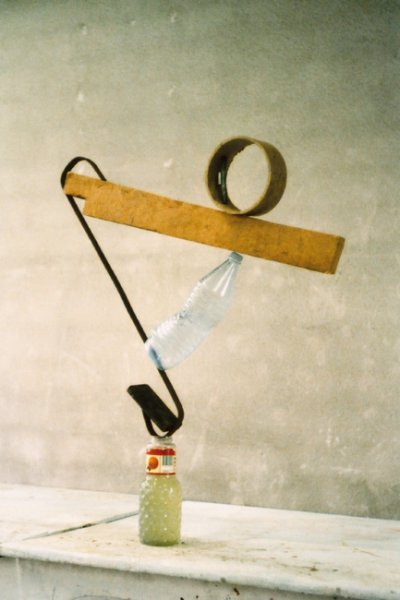
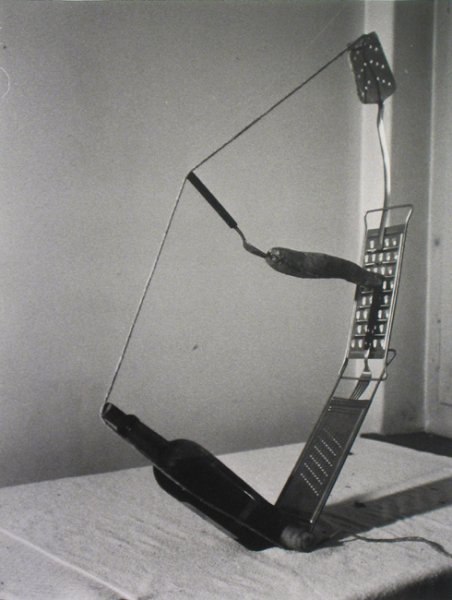
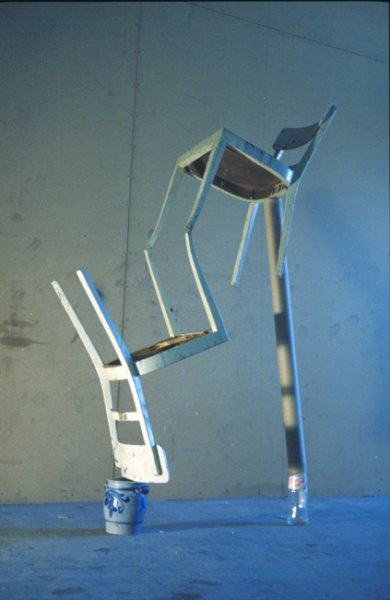
Ordinary Objects in an Extraordinary Way

Posted by Think Extraordinary on 12:03 AM 0 comments

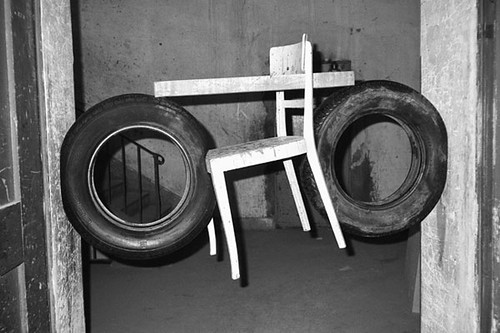
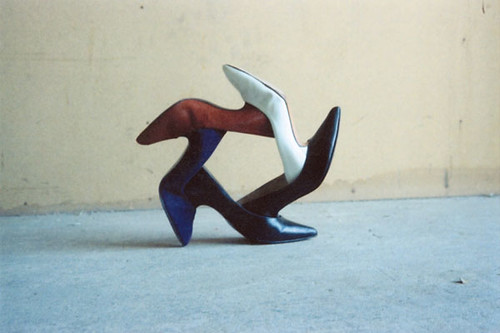
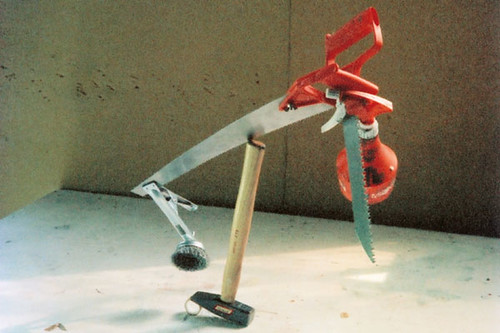
But first, a few vintage Objects example of mind-bending balance, done for the camera:
(most images are from vintagephoto)


(images credit: vintagephoto)

Now, on with the balancing objects:
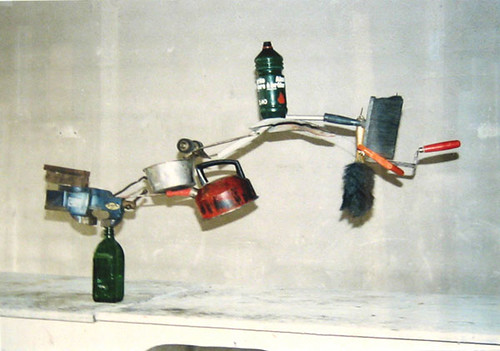

(images credit: Igrushka.kz and Knuttz)

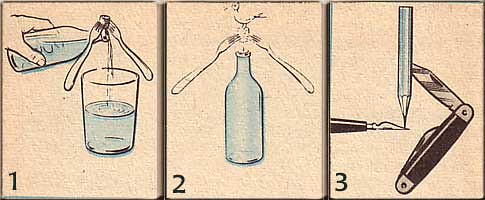
The following videos illustrate the most classic examples of equilibrium:

(videos credit: Curiosoperoinutil)

People in Sri Lanka are masters of this special “Balancing Act”:


(image credit: Exodus.co.uk)

Balancing rocks could be a topic for a separate post, bearing in mind how popular it is among various artists - expertly balancing whatever shapes nature gives them.
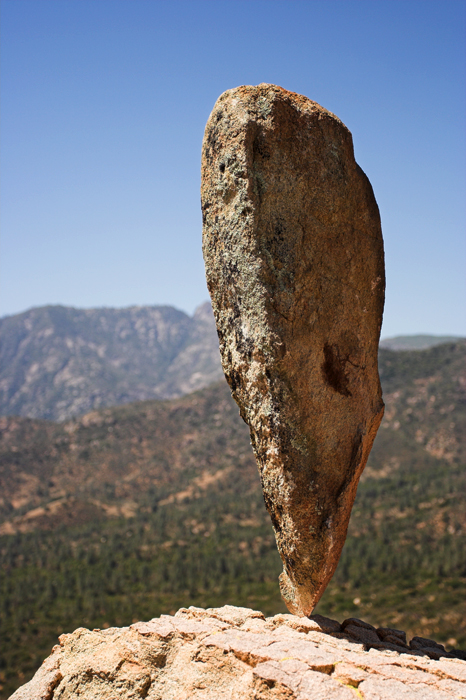

(image credit: Jeff Ambrose)


Continue...